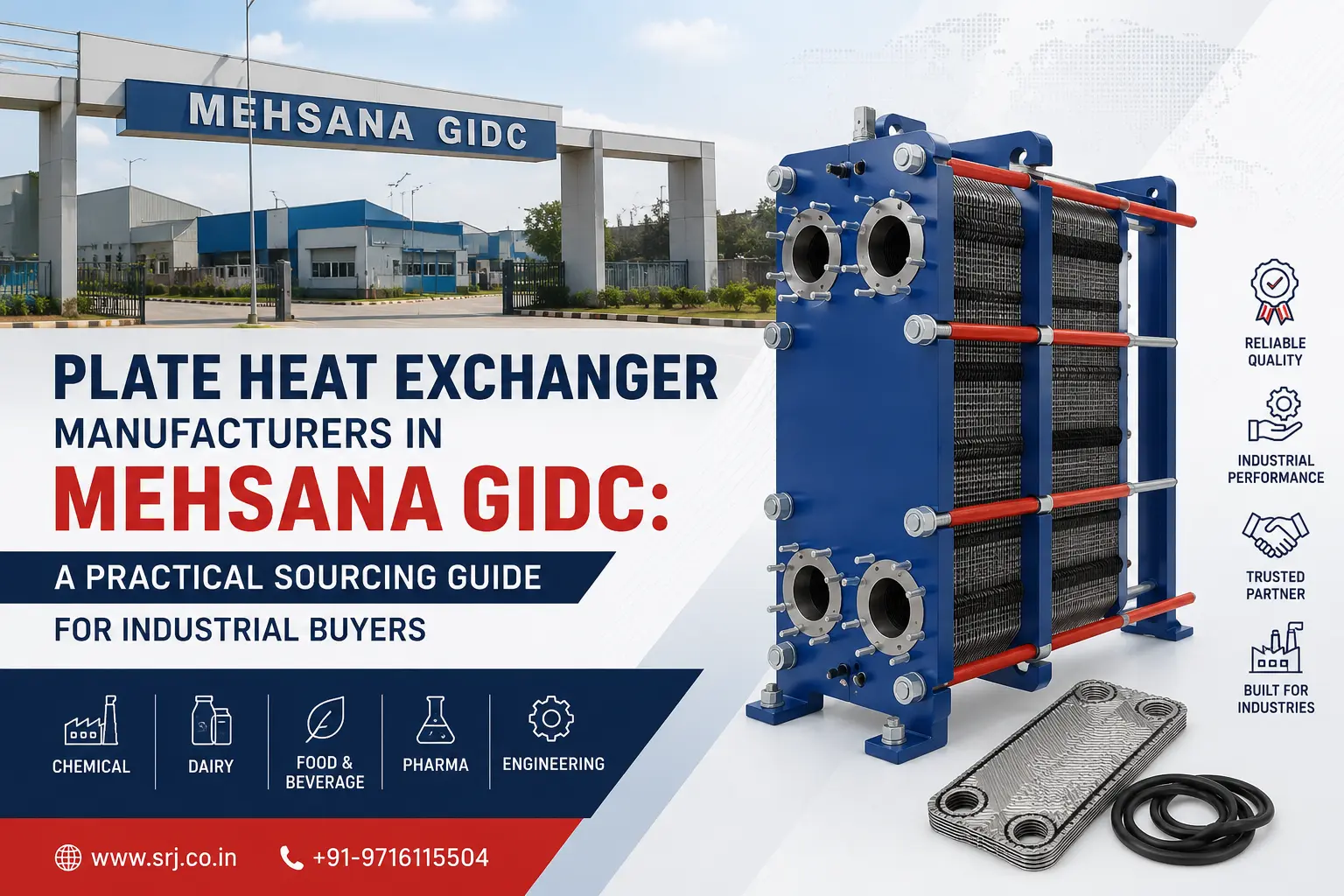
Plate Heat Exchanger Manufacturers in Mehsana GIDC: A Practical Sourcing Guide for Industrial Buyers
If you run a dairy plant, a chemical unit, or a processing line anywhere in North Gujarat, choosing the right plate heat exchanger manufacturers in Mehsana GIDC is a decision that quietly shapes your plant's efficiency for years. A well-matched PHE keeps pasteurisation stable, utility bills predictable, and maintenance windows short; a poorly specified one does the opposite. This guide covers what actually matters when you buy — the engineering, the sourcing logic, and the questions procurement teams often forget.
What Is a Plate Heat Exchanger, in Plain Terms?
A plate heat exchanger (PHE) transfers heat between two fluids without letting them mix. Thin, corrugated stainless-steel plates are stacked in a frame; the two fluids flow through alternate channels — one hot, one cold — while gaskets keep the streams sealed and separate.
Because the corrugations create turbulence even at low flow, a PHE moves heat far more efficiently than a shell-and-tube unit of the same size. That compactness is why you see them everywhere in Mehsana's dairy, chemical, and pharma clusters, where floor space is tight and thermal duty is heavy.
Why Mehsana GIDC Is a Strong Base for PHE Sourcing
Mehsana isn't a random dot on the map for heat-transfer equipment. The district sits at the heart of one of Asia's largest dairy ecosystems, and dairy processing is fundamentally a heat-exchange business — pasteurisation, chilling, regeneration, and CIP (clean-in-place) cycles all lean on PHEs. That demand has pulled a real engineering supply chain into the area.
Sourcing locally within the GIDC belt gives you three concrete advantages:
Faster service response. When a gasket fails mid-run, a supplier two hours away beats one two states away.
Application-aware design. Vendors serving Mehsana's dairies already understand sanitary, food-grade layouts without a long briefing.
Lower downtime cost. Local re-plating and re-gasketing means fewer delays on spares.
For food-grade lines, confirm your supplier meets the sanitary standards referenced by the FSSAI framework.
How to Choose Among Plate Heat Exchanger Manufacturers in Mehsana GIDC
Price per unit is the easiest number to compare and the worst one to decide on. Here's the checklist experienced plant engineers actually use.
Match the Plate Metallurgy to Your Fluid
AISI 316 stainless steel handles most water, milk, and mild-chemical duties. But chloride-rich brines, seawater cooling, or aggressive acids may need titanium or higher alloys. Get this wrong and it shows up as pinhole corrosion six months later — not on day one.
Confirm the Thermal Design, Not Just the Model Number
Ask for the thermal datasheet: heat duty (kW), approach temperature, pressure drop, and plate count. A credible manufacturer sizes the unit to your flow rates and fouling factor — not a catalogue model that may or may not fit.
Check Gasket Compatibility and Availability
Gaskets are the wear part. Confirm the elastomer grade — NBR for oily duty, EPDM for hot water and dairy, Viton/FKM for chemicals — and, critically, the spare-gasket lead time. This is where local plate heat exchanger suppliers in Mehsana earn their keep.
Ask About Re-Plating and Refurbishment
A vendor who can strip, clean, re-gasket, and pressure-test your existing frame is worth more than one who only sells new — refurbishment often restores 90%+ performance at a fraction of replacement cost.
Plate Heat Exchanger Suppliers in Mehsana vs Manufacturers — What's the Difference?
Buyers often use "manufacturer" and "supplier" interchangeably, but the distinction matters when things go wrong. A manufacturer presses the plates, fabricates the frame, and controls the design. A supplier or trader may stock units and spares but lean on others for engineering. For a standard one-off unit, a good supplier is fine. For a critical line needing re-engineering, custom plate packs, and long-term spares, buying closer to the source protects you.
When comparing quotes, ask one simple question: "Can you modify the plate count if my duty changes next year?" Manufacturers say yes with a datasheet. Pure traders usually can't.
Plate Heat Exchanger Manufacturers in Kadi and the Wider North Gujarat Cluster
Mehsana rarely operates alone. Plate heat exchanger manufacturers in Kadi serve the same industrial corridor, and Kadi's proximity to Ahmedabad's chemical and pharma base means its vendors often carry strong experience with corrosive-media applications. If your process sits on the chemistry side rather than the dairy side, the Kadi cluster belongs on your shortlist.
The practical takeaway: treat Mehsana, Kadi, Gojaria, and Visnagar as one sourcing region, not isolated towns. Widening your radius by 30–40 km often improves delivery times, service coverage, and access to specialised alloys.
PHE Gasket Manufacturers in Gojaria: Why Gaskets Deserve Real Attention
Here's what most buyers underestimate: the gasket, not the plate, usually decides your maintenance schedule. Plates last years; gaskets are consumables. Sourcing from experienced PHE gasket manufacturers in Gojaria and the surrounding belt keeps your spares pipeline short and downtime rare.
A quality PHE gasket does three jobs at once — seal against pressure, resist the fluid chemically, and survive repeated thermal cycling without hardening. Cheap gaskets fail on the third point first.
PHE Gasket Suppliers in Visnagar and Getting Material Selection Right
Reliable PHE gasket suppliers in Visnagar matter most when you match the elastomer to the duty. A quick reference:
EPDM — hot water, steam, dairy, and CIP cycles up to ~150 °C. The dairy default.
NBR (Nitrile) — oils, fats, and general water duty; not for high heat.
FKM (Viton) — aggressive chemicals and higher temperatures.
Also decide between glued and clip-in / snap-on gaskets — glueless designs cut re-gasketing time noticeably during shutdowns. Confirm the elastomer grade against recognised ISO material references before a large order.
Maintenance and Operational Considerations That Extend PHE Life
Buying the right unit is half the job; running it well is the other.
Monitor pressure drop. A rising differential is your first fouling signal — clean before efficiency collapses.
Torque the frame to spec. Over-tightening crushes gaskets; under-tightening leaks. Follow the plate-pack dimension, not "feel".
Keep a gasket set on the shelf. Downtime cost dwarfs the price of holding spares locally.
For heat-recovery best practice, vendor-neutral references from ASHRAE are a solid starting point.
Frequently Asked Questions
Which industries in Mehsana use plate heat exchangers the most? Dairy and food processing lead, thanks to the region's milk ecosystem, followed by chemicals, pharma, textiles, and edible-oil units.
How long does a plate heat exchanger last? The frame and plates can run 10–20 years with proper care. Gaskets typically need replacement every few years, depending on duty and cleaning frequency.
Should I buy locally or from a bigger city? For critical process lines, local sourcing within the Mehsana–Kadi–Visnagar belt usually wins on service speed and spare availability — the two things that actually cost you money during a breakdown. Most old units can also be re-plated and re-gasketed instead of being replaced.
Final Thoughts
Choosing among plate heat exchanger manufacturers in Mehsana GIDC comes down to more than a quotation — it's about metallurgy that matches your fluid, gaskets that match your duty, and a partner who'll still answer the phone when a seal fails mid-shift. Treat the North Gujarat cluster as one connected sourcing region, insist on a proper thermal datasheet, and keep spares close. Do that, and your heat exchanger becomes the reliable, invisible workhorse it's meant to be.
Ready to specify the right unit? Explore our plate heat exchanger range and PHE gasket options, or get in touch for an application-based recommendation.